
Science
Scientific discoveries and research

Fossil footprints reveal body size and group dynamics of 1.4-million-year-old human relative
Ancient footprints preserved along the shores of Kenya's Lake Turkana are reshaping scientists' understanding of one of humanity's extinct relatives. A paper pu...

Gender gap in predicted grades raises questions over their use in university admissions
A study of more than 350,000 students in England has found that teachers predict higher A-Level grades for girls than boys who go on to achieve the same exam re...

Hidden DNA copying may give bacteria a faster route to antibiotic resistance
The dangers of antibiotic overuse have become increasingly clear in recent decades. Excessive use accelerates the evolution of bacterial resistance to antibioti...

New research turns the Dunning-Kruger effect on its head: Rethinking the confident incompetent
Researchers at the University of Bath and The London School of Economics and Political Science (LSE) suggest that the celebrated Dunning-Kruger effect, often ta...

Astronomers identify one of the universe's rarest black hole events
A team of astronomers at the University of North Carolina at Chapel Hill has observed an extremely rare "wandering" black hole located tens of thousands of ligh...

Can a newly discovered soil fungus stop the devastating African armyworm when chemicals have failed?
The African armyworm is a highly destructive migratory pest that damages maize, sorghum, millet and sugarcane. These caterpillars also cause indirect damage to...

Highly tunable electro-optic isolator achieves one-way light flow on photonic chips
Integrated photonic devices—tiny circuits that use light instead of electrons—are becoming increasingly important for scalable photonics technologies and high-b...

Biomolecular condensates reveal surprising activity as catalysts
Biomolecular condensates are ubiquitous in living cells, including bacteria, viruses, plants and mammalian systems. These membraneless bodies, or molecular comm...

Rethinking how we protect the world's mountain communities
As melting glaciers and shifting climates push mountain ecosystems to the brink, an international team of researchers has outlined a radical new approach aimed...

AI finds tiny gene editor changes that reduce unintended DNA edits
Gene editing is a highly precise and powerful technology that allows scientists to insert, delete, modify or replace DNA bases in living organisms. It has a var...

Low-cost, rare-earth-free material for carbon recycling
To improve carbon recycling and reduce emissions, researchers at Science Tokyo developed iron-substituted calcium titanate (Fe-doped CaTiO3) as an environmental...
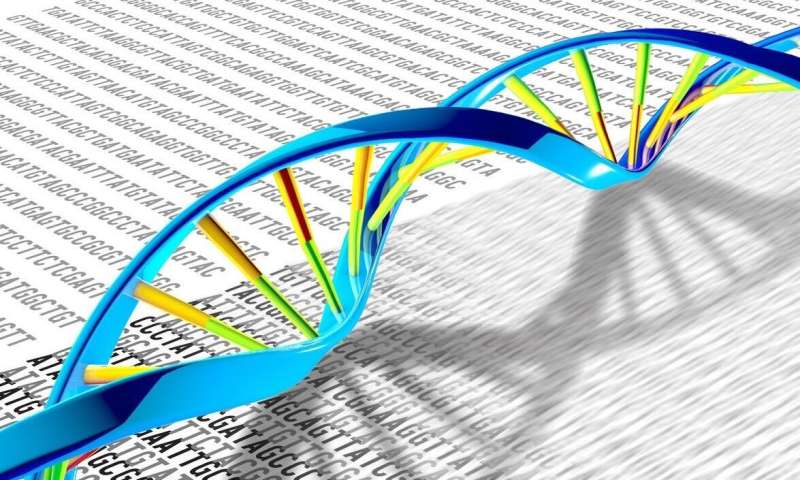
Scientists pinpoint where cells first begin copying DNA
Researchers at the MRC Laboratory of Medical Sciences (LMS) and collaborators have uncovered one of the earliest steps in DNA replication: the moment a cell fir...