
Science
Scientific discoveries and research
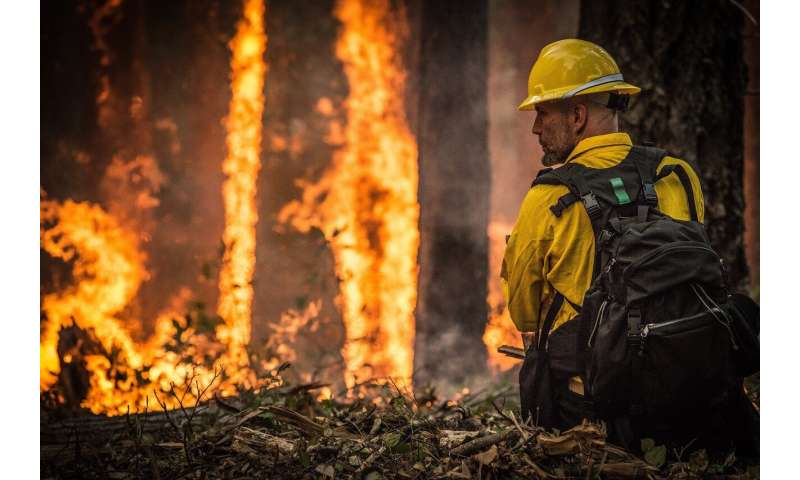
Fast-moving wildfires may prevent western forests from recovering
The severe, drought-fueled fires now burning across much of the American West and Canada may be scorching forests so thoroughly that they cannot recover to the...

Pain isn't the point: European viper venoms may have evolved to subdue prey
For many people, the fear of venomous snakes is linked to one thing: pain. Yet new research led by scientists at Bangor University suggests that, for Europe's v...

Greener processing cuts cost of novel material for water decontamination
University of Birmingham scientists who used green chemistry to make a next-generation metal-organic framework (MOF) for capturing heavy metals from wastewater...

Wars between nations face persistent escalation risk, decades of conflict data suggest
Military leaders frequently underestimate how big the wars they engage in will get. Gen. Douglas MacArthur predicted U.S. troops could come home from the Korean...

Novel polymer membrane design improves high-purity hydrogen separation
In Nature Communications a research team led by Professor Tae-Hyun Bae of the KAIST Department of Chemical and Biomolecular Engineering introduced hydrogen-sele...

First supernovae may have seeded rocky planet building blocks 100 million years after the Big Bang
The building blocks of rocky planets may have begun forming just 100 million years after the Big Bang—long before the first galaxies even existed—according to n...

Soil-dwelling myxobacteria reveal five new classes of bioactive compounds
Most antibiotics used clinically are based on natural compounds produced by bacteria and other microorganisms. At the Helmholtz Institute for Pharmaceutical Res...

A $10 soil test goes global with virtual reality training for farmers
Last year, we described Agrilo, an affordable "colorimetric" soil-testing system developed through research at MacEwan University. Using a smartphone camera to...

Europe's worst medieval flood highlights risk of successive extreme events
New research involving the University of Liverpool has provided comprehensive insights into the largest flood event in Europe over the past millennium—the flood...

DNA research highlights the genetic vulnerability of Asian elephants
The DNA of Asian elephants tells a concerning story. Although all four subspecies are under pressure, there are considerable differences in their genetic health...

Severe weather now a key predictor of where bird species occur in North America
Scorching heat waves, severe cold snaps and other extreme weather events are limiting where species can exist—and affecting biodiversity estimates—for more than...

An open-source tool for automated consolidation of lipid data
In collaboration with the University of Vienna, the Technical University of Munich (TUM), and Heidelberg University, researchers at the TUD Dresden University o...