
Science
Scientific discoveries and research
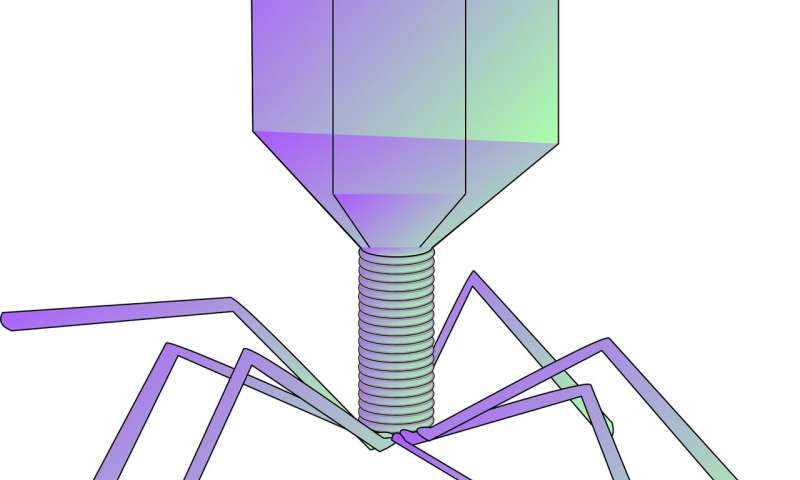
Variations in virus tails may help predict which phages kill more bacterial strains
Bacteriophages—or phages, for short—are viruses that kill bacteria, and scientists have been studying them for decades as a possible solution to antibiotic-resi...

Facial recognition trial by police in Australia delivered strong results. But was it an ethical success?
The results of Australia's first live facial recognition trial have been released. Since June 2026, the Western Australian Police Force has been testing the tec...

Tic-tac-toe simulator offers a way to teach quantum physics without matrix algebra
A team from SUNY Polytechnic Institute has designed a quantum rule-based simulator known as Quantum Tic-Tac-Toe. The simulator was originally designed to help s...

Roaming black holes may tell the hidden history of galaxies
If you want to understand the origins of black holes, Yale astronomers say, you need to look beyond the centers of galaxies and start searching in the nooks and...

Spin waves inside a nano-oscillator imaged for the first time
For the first time, researchers have directly imaged the magnetization dynamics inside a spin Hall nano-oscillator—a nanoscale device that converts direct curre...

SKA may detect magnetic fields on distant exoplanets
Studying exoplanets has given astronomers insights into the characteristics that could help them find life beyond Earth. For years, astronomers thought an exopl...

How diffractive solar sails could stop a killer asteroid at 100 km/s
Asteroids don't come with a warning label that they might one day hit Earth. While we don't know of any currently on course to do so, we are finding thousands o...

Report calls for government to introduce a charge on disposable cups
Around 2.5 billion single-use cups are used in the U.K. every year, yet fewer than 1% are recycled. They contribute to litter, contaminate recycling streams and...

Why a healthy seafloor matters for the Earth system
The seafloor is more than just the ground beneath the sea. Two-thirds of Earth's surface is covered by oceans, which have an average depth of almost 4 kilometer...

Hunting broadly not responsible for birds declining across Europe, study finds
Hunting is not the main reason bird populations are declining across Europe, according to new research from University College Dublin in collaboration with the...

Hairy feet, red eyes: Salish Sea reveals two sea spider species new to science
If you're swimming in the Salish Sea late at night and feel a skittering along your calves, tiny hairy feet tip-tapping their way higher and higher toward your...

Governments across Australia know how to stop violence against Indigenous women, they just don't do it
Indigenous women and children experience disproportionate levels of family violence. Aboriginal and Torres Strait Islander women are killed at rates up to six t...