
Science
Scientific discoveries and research

Britain's most artificial landscape may not survive climate change
Stretching across much of eastern England, the Fens produce a third of the country's vegetables and support tens of thousands of jobs. Yet around 33% of the reg...

Bone strength study reveals new clues about human evolution
Bipedalism, or walking on two legs, is one of the key features that distinguishes humans from other apes. But when and why our ancestors transitioned from a lif...

Incarceration may escalate criminal behavior in South Africa
Allowing petty offenders in South Africa to remain in the community may reduce their risk of committing serious crimes compared with imprisonment, according to...
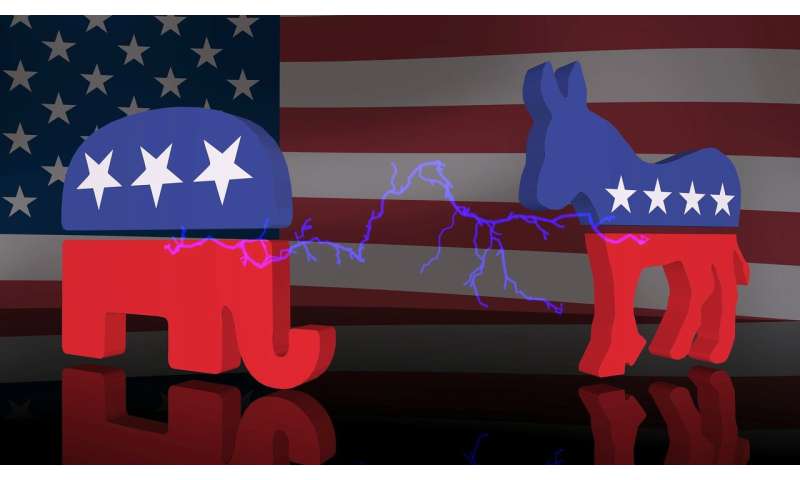
Most Americans reject political violence, but support can vary sharply by party
Republicans and conservatives are more likely than Democrats or liberals to justify political violence in 17 surveyed situations, according to a study published...

Tyrannosaurus rex teeth reveal a body temperature close to the human average
When picturing a scaled, toothy Tyrannosaurus rex stomping across North America, building nests and eating other dinosaurs, it's easy to forget that scientists...

Deep ocean, familiar trash: Plastic waste found alongside possible new species
It's no secret that plastic and other human trash are a problem for marine life, but our understanding has long focused on the ocean's surface. As described in...

Conserving just 35% of the nation's waterways could sustain freshwater biodiversity
By evaluating the health of waterways across the U.S., researchers have identified a network encompassing about one-third of rivers and streams that, if conserv...

AI reveals novel nighttime feeding behaviors in right whales
Right whales forage near the water's surface at night, putting them at greater risk of potentially fatal collisions with boats, Jay Kirkham at Dalhousie Univers...

We may soon be able to read long-lost ancient scrolls damaged by the eruption of Mount Vesuvius
X-ray technology and artificial intelligence—along with the discovery of lead in the ink of fragments from a collection of ancient Roman scrolls—could soon help...

Hedgehog coronaviruses may threaten cats more than humans, new study finds
Washington State University researchers have discovered how a group of coronaviruses circulating in hedgehogs invades host cells, a key to understanding their p...

From 10 to 22 years: The Nancy Grace Roman Space Telescope's mission has just been extended
The Nancy Grace Roman Space Telescope hasn't yet reached its Sun–Earth L2 orbit, and it already has some good news. NASA has announced that the mission has enou...

Prime assembly can correct multiple mutations at once, pointing toward universal gene therapies
Genomic editing holds great potential yet continues to have limitations. Current methods either rely on untargeted gene delivery or short DNA edits that need to...