
Science
Scientific discoveries and research

Trapped subsurface heat may have triggered Antarctica's sudden sea ice loss
In 2016, Antarctic sea ice, which had previously shown record expansion, shifted rapidly toward unusually low levels. This abrupt shift left scientists scratchi...

A much more sensitive fentanyl detection strip, thanks to physics
Following the beginning of the COVID-19 outbreak, lateral flow assays (LFAs)—the category of test strips in which the presence or lack of a pink line indicates...

Snow flies produce bursts of heat and proteins to avoid freezing, new study finds
In a new study, Northwestern University scientists explored how snow flies—small, wingless insects that crawl across snow to find mates and lay eggs—survive in...

Preparing for the next pandemic: Scientists discover a new class of influenza antivirals
Researchers from Leiden University, University of York, University of Barcelona/IQTCUB/ICREA and The Francis Crick Institute report a new class of experimental...
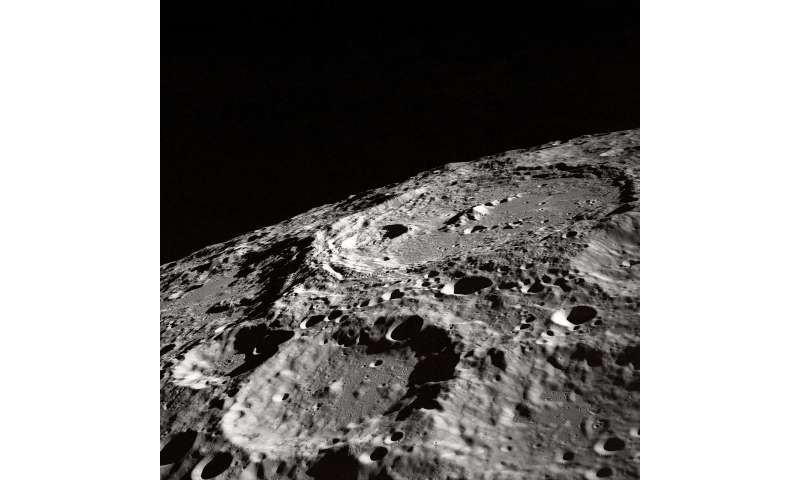
NASA to 'pause' orbital lunar space station project
NASA's chief on Tuesday said the US space agency "intends to pause" its Gateway project that would have created a space station in orbit around the moon, instea...

A complicated future for a methane-cleansing molecule
Methane is a powerful greenhouse gas that is second only to carbon dioxide in driving up global temperatures. But it doesn't linger in the atmosphere for long t...

A catalyst-free way to add boron to arenes
RIKEN chemists have demonstrated a method to synthesize organic compounds that contain the element boron. Organoboron compounds are used in a wide range of drug...

Europe's Late Neanderthals descended from a single population, DNA analysis suggests
A study incorporating new DNA data and archaeological evidence has shown that the last Neanderthals in Europe experienced a major population turnover, resulting...

A solar system in the making? Two planets spotted forming in disk around young star
Astronomers have observed two planets forming in the disk around a young star named WISPIT 2. Having previously detected one planet, the team has now employed E...

The truth of timekeeping lies within: Key developments in understanding circadian rhythms
Almost all living things have an internal 24-hour clock that remains accurate regardless of temperature or other environmental changes. This clock is a highly s...

A spinel crystal structure exhibits unusual, pressure-induced superconductivity
Superconductors are materials that conduct electricity with an electrical resistance of zero. Superconductivity is generally observed when materials are cooled...

New lipid nanoparticle design improves precision of mRNA vaccine delivery
Penn Engineers have redesigned a key component of lipid nanoparticles (LNPs), the delivery vehicles behind mRNA vaccines, to steer the particles toward lymph no...