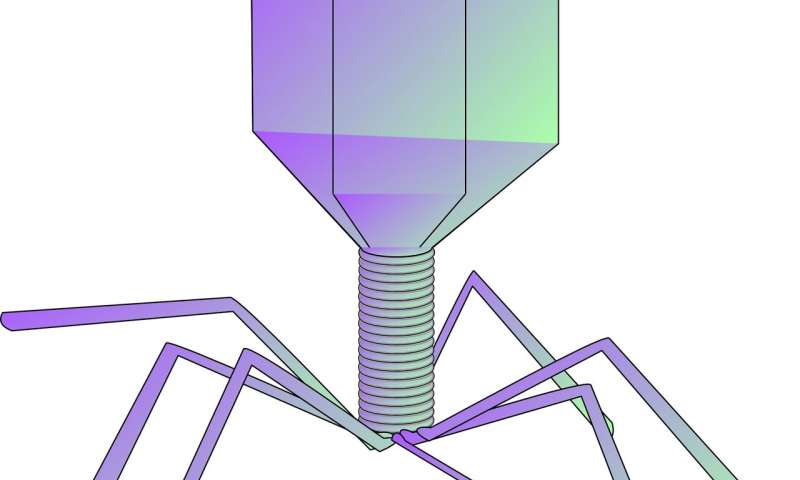
Bacteria may identify a virus without recognizing its DNA
When a virus enters a cell, its top priority is to replicate its genome rapidly, creating new viruses to infect elsewhere. The host has the opposite priority: to destroy the virus, ideally before it can do any harm. Biology has evolved diverse tactics for viral recognition and destruction, but they...

Image: Phys.org
When a virus enters a cell, its top priority is to replicate its genome rapidly, creating new viruses to infect elsewhere. The host has the opposite priority: to destroy the virus, ideally before it can do any harm. Biology has evolved diverse tactics for viral recognition and destruction, but they share a common theme—sensing that an invading viral genome is present in a cell.
Originally published at Phys.org