
Science
Scientific discoveries and research

'Near-misses' in particle accelerators can illuminate new physics, study finds
Particle accelerators reveal the heart of nuclear matter by smashing together atoms at close to the speed of light. The high-energy collisions produce a shower...

What a 'self-sustaining' glucose reaction means for greener chemical manufacturing
A Korean research team, led by Dr. Young Kyu Hwang, Dr. Kyung-Ryul Oh, and Dr. Jihoon Kim at the Korea Research Institute of Chemical Technology (KRICT) has dev...

Why believing 'practice makes perfect' may matter more than grit for students' grades
Different forms of motivation affect how pupils perform in upper secondary school, a recent NTNU study shows. Pupils who believe they can improve through practi...

AI tool can screen unknown bacteria for disease-linked genes, moving closer to preventing pandemics
PathogenFinder2 is a new AI tool developed by researchers at DTU in Denmark, in collaboration with international partners, to determine whether an unfamiliar ba...

Generative AI for polymer design passes lab tests with a new dielectric material
The words on this page mean something because they are assembled in a particular order and follow the complex rules of grammar and syntax. Creating new chemical...

Hubble detects first-ever spin reversal of tiny comet
Astronomers using NASA's Hubble Space Telescope have found evidence that the spinning of a small comet slowed and then reversed its direction of rotation, offer...

In flight simulators, crews with better rapport perform better, study finds
Picture a cockpit crew of two who met just minutes before takeoff, now descending through a turbulent midnight sky. They aren't looking at each other—their eyes...

No delta left behind? Study finds adaptation to rising seas is possible in most deltas... for now
Around the world, in nearly every delta, people can adapt to rising sea levels using today's technological capabilities, materials, and space, according to rese...

How did Venus become a hellscape? 234,000 simulations reveal four possible paths
Venus is increasingly becoming a touch point for our studies of exoplanets, as missions like the James Webb Space Telescope (JWST) and the upcoming Habitable Wo...

Earth's magnetic field creates a previously undetected pocket of protection from radiation on the moon
High-energy particles called galactic cosmic rays (GCRs) bombard unprotected objects in space, often causing damage. Earth, however, is protected by its magneti...

Programmable superconducting diode can flow on command
A team of researchers led by the University of Pittsburgh demonstrated a programmable superconducting diode at the LaAlO3/KTaO3 (LAO/KTO) interface, an advance...
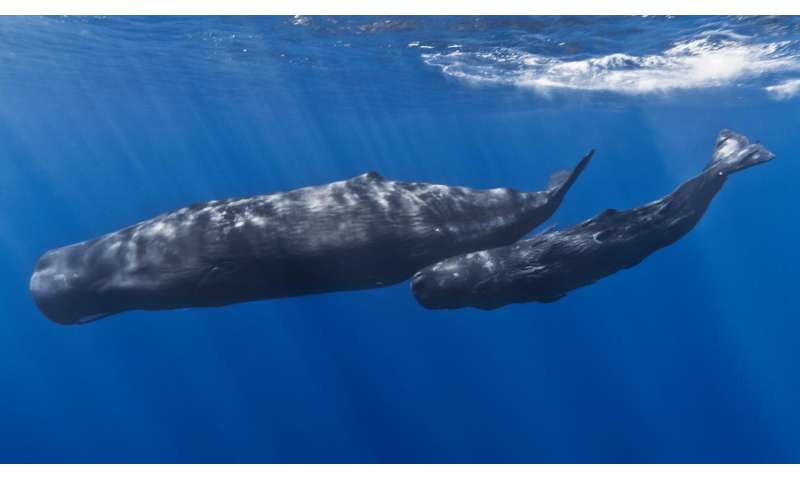
Rare sperm whale birth and coordinated caregiving revealed by drone footage and underwater audio
Project CETI (Cetacean Translation Initiative) has published two scientific studies presenting the most comprehensive documentation of a sperm whale birth ever...