
Dark matter could explain the earliest supermassive black holes
A growing mystery in astronomy is the presence of gargantuan black holes—some weighing as much as a billion suns—existing less than a billion years after the Big Bang. According to the standard theory of black hole formation, these black holes simply should not have had enough time to grow so large....
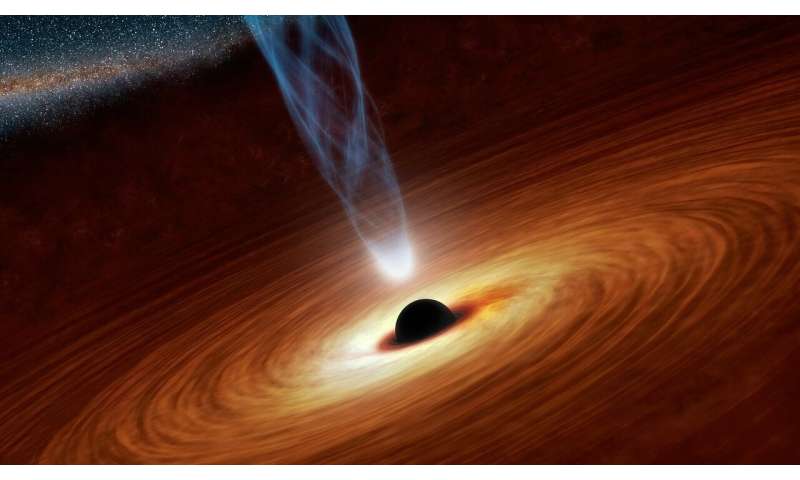
Image: Phys.org
A growing mystery in astronomy is the presence of gargantuan black holes—some weighing as much as a billion suns—existing less than a billion years after the Big Bang. According to the standard theory of black hole formation, these black holes simply should not have had enough time to grow so large. A study led by University of California, Riverside graduate student Yash Aggarwal shows that dark matter decays could be the key to understanding the origin of these cosmic behemoths. Published in the Journal of Cosmology and Astroparticle Physics, the research shows that the energy released from dark matter decay could alter the chemistry of early galaxies enough to cause some of them to directly collapse into black holes rather than forming stars.
Originally published at Phys.org


